Are Sanitary Pads Safe? What Actually Happens From Raw Material to Factory Gate
A plain-language look at how sanitary pads are made and checked - the cleanroom-style workshop, metal detection, weight and vision checks, raw material screening, and what it means when you choose a b···
Share target market, size range, pack count, artwork status and order quantity for quotation.
Introduction
Every so often a story surfaces online — a bug in a sanitary pad, a foreign object in a diaper. People who work in this industry get asked the same thing by family and friends: is what you make actually safe? It's a fair question, and it deserves a straight answer. Here's what actually happens between raw material and the box on the shelf, in plain language.
The workshop is not what people imagine
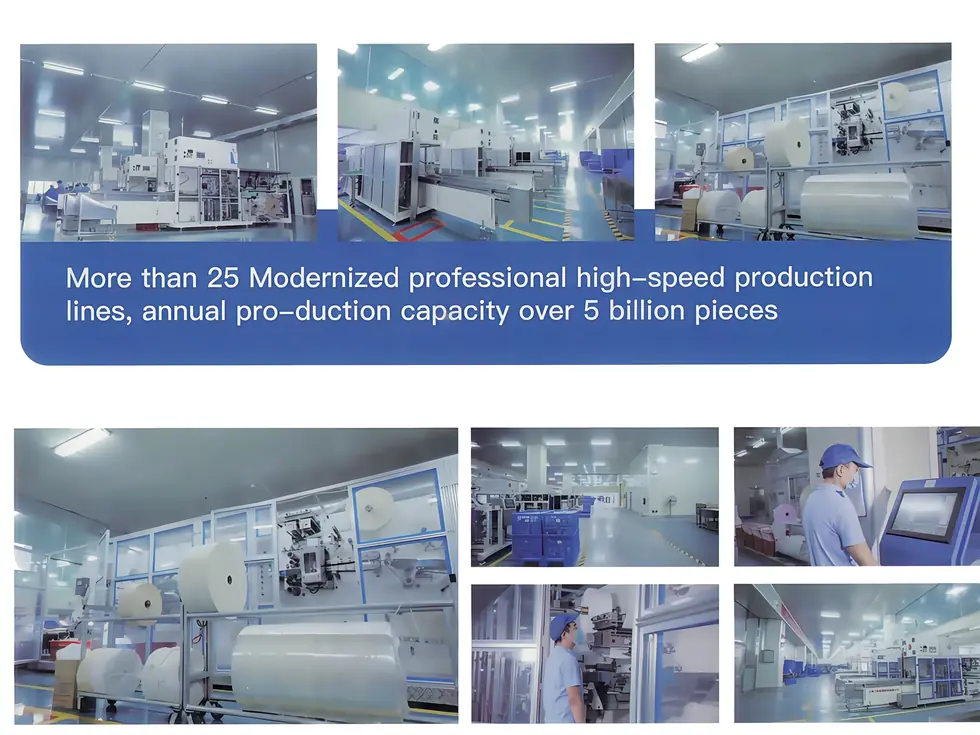
Most people picture a factory as rows of workers hand-assembling products. A properly run hygiene factory is the opposite: very little human contact, almost fully machine production. The reason isn't efficiency — it's that people are the biggest contamination risk.
- The facility is designed for pest control from the blueprint stage — no gaps, no shortcuts.
- Workers change into cleanroom clothing, disinfect, and pass through an air shower (a strong air door that blows off dust and lint) before entering the line.
- The production area is kept dust-controlled and clean, with strict management of both materials and people.
Think of it less as a workshop and more as an operating room — in some ways stricter.
Every single piece goes through "security"
How do foreign objects get stopped? Picture the production line as airport security, running checks during production, not after it:
Nothing waits until the end of the day for a single final check. The line inspects continuously, piece by piece, through several gates stacked together.
The first gate is the raw material, not the finished good
Most people assume only the finished product gets checked. In reality, the earlier gate is at the raw material. When a manufacturer selects nonwoven fabric, finishing oils, and fibers, a reputable factory checks material safety documentation and tests whether benzene-class and olefin-class substances stay within controlled limits.
If the raw material doesn't pass, it never enters the production line — the finished-good test is a backstop, not the first line of defense.
The national standards have also been tightening. Revisions like GB 15979-2024 add quantitative detection requirements for more substances, pushing both regulators and the industry's floor higher. The bar keeps moving up — which is the direction it should move.
What that means when you buy
Three practical rules:
- Look at credentials. Choose brands with proper production qualifications and certifications — don't decide on ads and price alone.
- Read the label. Production date, the execution standard, and the manufacturer should all be clear and complete. If they aren't, that's a signal.
- Keep news in proportion. An extreme individual case is not the industry norm. Buying from normal channels and established brands is the low-stress way to get peace of mind.
Sanitary pads and diapers sit closest to the body of anything most people buy. The requirement for them should be the highest standard there is. As manufacturers, that's what Nafei works from at our Guangdong production base: every line of defense, from source to factory gate, done properly.
Safety isn't luck. It's a series of checkpoints you can actually see. Choose registered brands, check credentials, trust the standards — that's usually enough.
Frequently asked questions
Are sanitary pads safe to use?
Yes, when they come from a properly registered manufacturer that meets the hygiene standard. The process is heavily machine-based with minimal human contact, raw materials are screened before production, and finished goods pass metal detection, weight checks and vision inspection before packing. Choosing registered brands from normal channels is the practical way to be sure.
How do factories stop foreign objects in pads?
Through continuous in-line inspection: metal detection catches ferrous objects, weight checks reject abnormal pieces, and vision inspection intercepts appearance defects. The checks run during production rather than only at the end, so each piece goes through several gates.
Is raw material checked before production?
Yes — this is the earliest gate. Materials like nonwoven, finishing oils and fibers are screened against material safety documentation, and tested to keep benzene-class and olefin-class substances within controlled limits. Material that fails never enters the line.
What should I check before buying sanitary pads?
Three things: the brand's production qualifications and certifications, the label (production date, execution standard, manufacturer — all clear), and keeping single news cases in proportion. A registered brand from a normal channel is the safe default.
Request a Nafei OEM Quotation
Evaluating a factory, or building your own line? Tell us your target market and product type, and we'll share the process, test panel and facility certificates behind our sanitary pads and menstrual pants production — including third-party test reports you can verify. Send your spec and estimated volume for a transparent quotation.
Photos
Send a sampling brief for Are Sanitary Pads Safe? What Actually Happens From Raw Material to Factory Gate
Tell Nafei your target market, size range, absorbency preference, packaging artwork status and estimated order plan. Our team can reply with sample discussion and quotation details.
- Target market and sales channel
- Size, pack count and material preference
- Private label artwork or packaging reference
- Sample review, quantity and delivery timeline
-

Why Lancool Started With Disposable Menstrual Pants: The 'Sleep Peacefully' Answer
-

Are Sanitary Pads Safe? What Actually Happens From Raw Material to Factory Gate
-

Side-Open Disposable Menstrual Pants for Postpartum: Lancool Easy-Fit Review
-

Lancool Mint Cooling Menstrual Pants: Product Review of a Summer Night Pant