Why Sanitary Pad Discomfort Is Often About Moisture, Not True Allergy
2026-07-01
In a hygiene product interview, industry expert Jiao Yong shared a point that many sanitary pad users and OEM buyers should understand. Many consumers describe skin discomfort after using a pad as an allergy. But in many cases, the real issue may not be a true allergy at all.
A true allergy usually needs a specific trigger. For example, a person may react to seafood or a known substance. With sanitary pads, many users do not complete a formal source check. They feel redness, itchiness or discomfort after use, and the easiest word to use is allergy.
Jiao Yong offered a simple picture: in summer, if you wrap a wet towel around your hand and walk outside for a while, the skin may become uncomfortable. The issue is not that the towel is an allergen. The issue is moisture, heat and long contact with the skin.
Why the Word Allergy Can Be Misleading
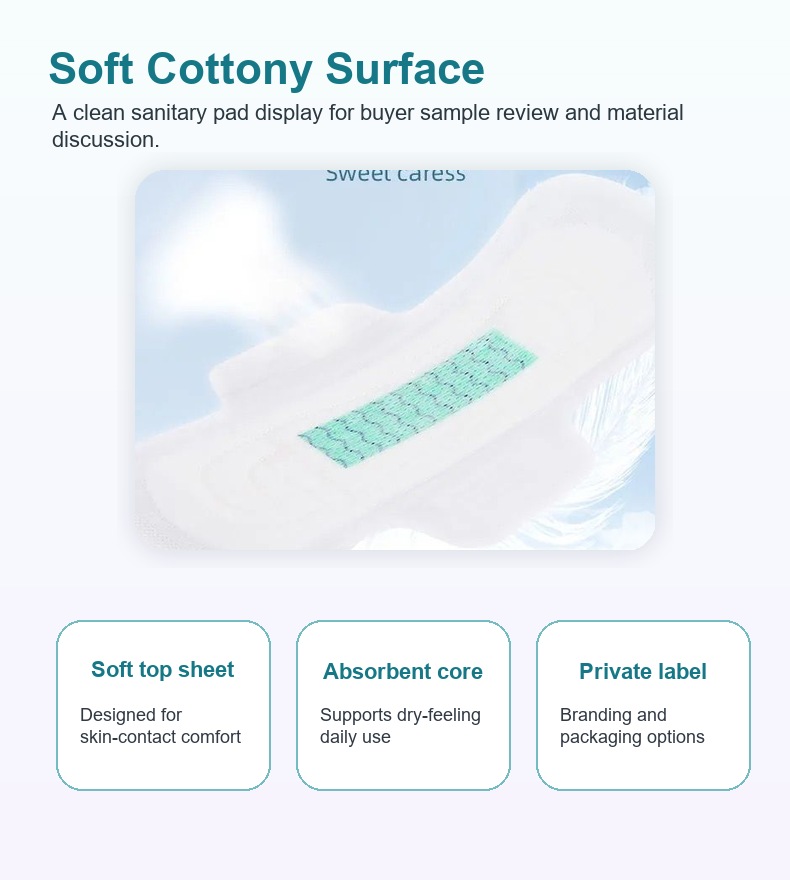
When users say allergy, they often mean visible discomfort after use. But the mechanism can be different. A pad is an absorbent product, and the wearing environment can become warm and humid. If the topsheet holds moisture for too long, the skin stays in contact with a damp surface.
That damp contact can lead users to describe the product as stuffy, sticky, itchy or uncomfortable. For product development, the useful question is not only whether the surface feels soft in the hand. The useful question is whether the surface helps move liquid away from the skin quickly.
The Pad Environment Is Like a Damp Towel
A sanitary pad is designed to absorb. But if liquid stays on the top layer instead of moving into the absorbent structure, the top layer becomes like a damp cloth against the body. This can affect comfort during long wearing time.
That is why dry surface performance is not a small detail. It is one of the most important parts of user comfort and repeat purchase experience.
Dryness Is a Safety-Oriented Product Logic
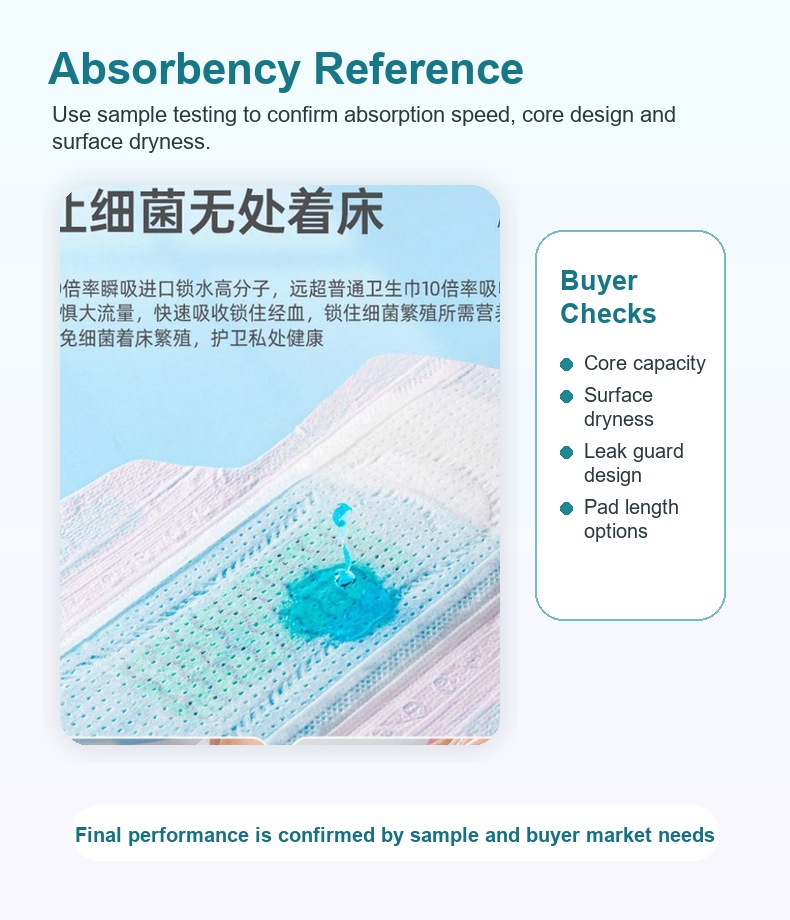
For OEM sample review, the topsheet should be judged by how quickly liquid passes through and how little moisture remains on the surface. A softer hand-feel is useful, but it cannot replace dryness.
Small visible spread is useful
When liquid is guided down quickly and the visible surface residue stays limited, the user is more likely to feel clean and dry.
High surface residue creates discomfort
If liquid spreads widely and stays on the topsheet, the user may feel dampness even if the dry sample felt soft before use.
| Review point | What buyers should check | OEM meaning |
|---|---|---|
| Pass-through speed | How quickly liquid moves below the topsheet | Supports a drier wearing feel |
| Surface residue | How much moisture remains visible on top | Reduces damp contact with skin |
| Rewet feeling | Whether pressure brings moisture back up | Important for long wearing comfort |
| Material structure | Loft, acquisition layer and core match | More useful than material name alone |
Softness Is Not Enough
Many products compete on words such as soft, cottony or skin-friendly. These words are easy to understand on packaging, but they do not prove that the pad will stay dry in use.
A cotton-like surface can still feel uncomfortable if it holds moisture. A nonwoven surface can perform well if it is fluffy, lets liquid pass down quickly and does not trap too much wetness on top. The material name matters less than the structure behavior.
What OEM Buyers Should Ask During Sample Review
Does the surface move liquid down quickly?
The topsheet should not hold too much moisture after contact. It should work together with the acquisition layer and core.
Does the user feel dry after pressure?
Pressing, sitting and movement can bring moisture back upward if the structure is not balanced.
Does the packaging claim match the sample?
Words such as dry feel or soft surface should be used only when the approved sample supports that direction.
Internal Link Path
For related sourcing, review the sanitary napkin category, compare 245mm anion sanitary pad samples, and read more sourcing notes in Ligenyuan OEM Sourcing Column.
FAQ
Does every discomfort complaint mean true allergy?
No. Many user complaints are better reviewed through moisture, heat, surface residue and wearing-time comfort.
Is pure cotton always safer?
Not automatically. The key question is whether the surface allows liquid to pass down and keeps the top layer dry enough during use.
What should private label buyers test?
Review pass-through speed, surface residue, rewet feeling, thickness, softness and packaging wording before confirming bulk order.
Discuss Sanitary Pad Surface Dryness With Nafei
Contact Ligenyuan for sanitary pad OEM discussion: WhatsApp: +86 13508489525 | Email: ligenyuan901@gmail.com | Send an inquiry.
Turn this guide into an OEM brief
Share your product direction, target market, packaging idea and sample questions. Nafei can help translate the buying guide into a practical RFQ discussion.
- Product type: period pants, sanitary pads or mixed OEM project
- Target country, channel and buyer positioning
- Size range, material preference and sample review focus
- Private label artwork, pack count and estimated quantity